

Articles on Construction,Interior Decoration,Landscaping and Vaastu Useful in Improving your Home
Jul 24, 2014
Choosing Your House Plan


Jul 5, 2014
Comparison between Basement and Additional Upper Floor

Comparison between Basement and Additional Upper Floor Construction
Construction of basement and multi storey building is the need of the hour as there is less availability of land and rates of the land are very high. We get additional usable space by constructing either basement or upper floor.
Comparison for both is given in the table below.
Apr 18, 2014
How to Design Stairs
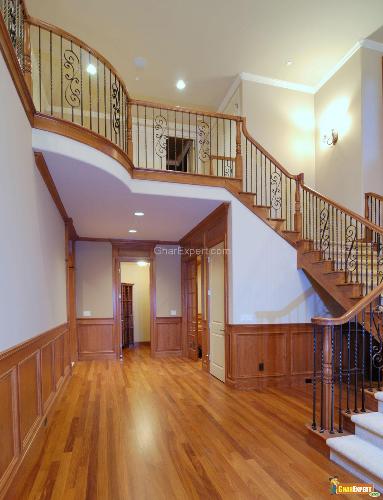 While designing stairs the house owner should consider every design requirement of the stairs since well designed stairs provide easy access to upper floors of the house. The steps of stairs may be constructed as a series of horizontal treads. The tread is horizontal width of stairs step whereas the enclosed space between treads is known as riser. The part of building having stairs is known as staircase. This article tells you about necessary design requirements to be kept in mind while designing stairs.
False Ceiling for your house
 Ceiling is the ultimate sky of
your home. To possess ceilings as sparkling as the sky, false ceilings is a
good option to decorate your home. False ceilings are popularly known as secondary
or false or suspended ceilings that are used beneath the original ceilings.
Oct 15, 2013
Advantages and Disadvantages of Plaster of Paris

Plaster is a building material used for coating walls and
ceilings. Plaster starts as a dry powder similar to mortar or cement and like
those materials it is mixed with water to form a paste which liberates heat and
then hardens. Unlike mortar and cement, plaster remains quite soft after
setting, and can be easily manipulated with metal tools or even sandpaper.
These characteristics make plaster suitable for a finishing, rather than a
load-bearing material.
The term plaster can refer to gypsum plaster (also known as
plaster of Paris), lime plaster, or cement plaster.
May 25, 2013
Green House With these Materials
 Home construction materials and building techniques have changed in the past several decades to become more energy efficient. Many new innovations are less harmful to our environment as well. By making your home "greener," you help to minimize pollution, protect the natural environment, and create a healthy, comfortable, non-hazardous home for you and your family. Think green before you begin any construction project. By considering these points, you can choose the most appropriate building materials and construction techniques.
 Home construction materials and building techniques have changed in the past several decades to become more energy efficient. Many new innovations are less harmful to our environment as well. By making your home "greener," you help to minimize pollution, protect the natural environment, and create a healthy, comfortable, non-hazardous home for you and your family. Think green before you begin any construction project. By considering these points, you can choose the most appropriate building materials and construction techniques.
May 20, 2013
Transform Your Home with Decorative Country Lighting

Do it yourself home improvement projects are both rewarding and usually will give you a good return on investment should you decide to sell or refinance your home. But you won't need to tear down walls, add closets or buy all new furniture to upgrade or change the decor in your house. Often it's the little things that count. Small changes in lighting alone can alter the look and feel of your home or even just one room with minimal financial investment and time.
Subscribe to:
Posts (Atom)